

An instant hot water dispenser and an electric kettle both supply hot water; what differs is the wait, the temperature control and the maintenance afterwards. The conclusion first: if you boil water occasionally, a kettle is enough. It is when you want water instantly, at several temperatures, or from a fixed draw-off point that an instant hot water dispenser becomes worth considering.
As for the question in the title — the drawbacks of an instant hot water dispenser are real: it costs more than a kettle, cartridges have to be replaced on schedule, it is not as good at delivering a large volume of hot water at once, and some models have installation requirements. This article lays out both sides, then matches them to your situation.
Instant-heating dispensers: pros and cons
Pros:
- Ready the moment you press: waiting for a kettle to boil takes a few minutes, while an instant dispenser delivers at the touch of a button — and once you are used to it this is the hardest thing to give up, especially when you are making coffee or porridge in a hurry in the morning.
- Multiple temperature settings: tea, coffee and infant formula each want their own temperature — the Department of Health recommends making up infant formula with water no cooler than 70°C, and an instant dispenser lets you select the temperature directly, with no boiling and waiting for it to cool.
- Heats only what you use: it heats what you draw, rather than boiling a full kettle and then keeping it warm again and again. Consumer Council testing has also noted how efficient instant dispensers are at heating on demand (see the references at the end); actual consumption still depends on how you use it.
- Filtration can be added: many models can take RO (reverse osmosis) or UF (ultrafiltration) filtration, which helps reduce bacteria, viruses and impurities in the water. Instant heating and filtration are two separate things, and are specified separately.
- Safety design: a child lock and an anti-scald spout are standard on most models, which is especially useful with young children in the house.
Cons:
- It costs more to buy: an instant hot water dispenser costs more up front than an electric kettle, and that is simply true. Whether it is worth it is better judged by spreading the price across the number of times you use it each day than by the price tag alone.
- Cartridges have to be replaced on schedule: on models with filtration, cartridges are an ongoing cost — pre-filters generally once a year, RO membranes generally every two to three years, subject to the maintenance arrangement. The upside is that it is a cost you can budget for; it does not appear out of nowhere.
- Not as good for a large volume at once: instant heating works on the water as it flows through, so for filling a large stock pot in one go a kettle is more direct. For hotpot and heavy cooking, the kettle still has a role.
- There are installation considerations: a plumbed-in model needs a water source and power nearby, so it cannot simply be set down anywhere; a tank model is far freer. For a breakdown of the installation conditions, seeInstalling an instant hot water dispenser.
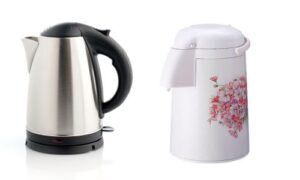
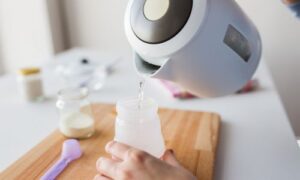
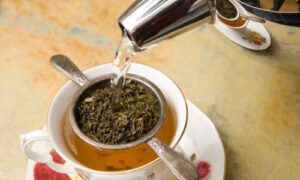
Electric kettles: pros and cons
Pros:
- Easy on the wallet: there are options at a hundred-odd dollars, and replacing one when it fails is no great loss — the lowest barrier to hot water there is.
- A large volume in one go: a full kettle boiled and poured into a stock pot or a herbal tea pot is the most direct route when a lot of water is needed at once.
- No installation: a socket is all it needs, so moving house, renting, or sitting on a desk is no trouble at all.
Cons:
- The wait: every time it starts from room temperature, and those few minutes repeat day after day; pour it out and want more, and the wait starts again.
- Only one temperature: most kettles only boil, so for infant formula or green tea you boil and then wait for it to cool — both the timing and the temperature are guesswork.
- Reboiling uses power: the habit of keeping water warm or reboiling it adds up over time, and this is where a model that heats only what you draw has the advantage.
- Limescale needs dealing with: Hong Kong's water is on the soft side, so it is better here than in hard-water places, but scale still builds up in the base of a kettle over time and has to be cleaned off periodically.
Which setting suits which
An instant-heating dispenser suits:
- Households drawing hot water several times a day — the difference is clearest when formula, tea and coffee follow one after another.
- Uses that need an accurate temperature, such as making up infant formula.
- Situations with a fixed draw-off point: inOffice Water Dispensersettings, instant dispensing is far more practical than colleagues taking turns to boil a kettle.
- Users who want to deal with filtration at the same time — one machine covering both heating and filtering.
An electric kettle suits:
- Households that need hot water only occasionally, with no set pattern of use.
- Occasions calling for a large volume of boiling water at once (hotpot, cooking).
- Renters, or anyone who would rather not install any equipment.
- Situations where the budget runs to a couple of hundred dollars — nothing beats a kettle at that price.
Conclusion: instant-heating dispenser vs kettle
The two are not really rivals; they divide the work. The kettle wins on price and on volume in one go; the instant dispenser wins on speed for frequent daily use, on accurate temperature, and on the option of filtration. What we have seen on site over nearly thirty years is that once a household gets used to hot water at the touch of a button, the kettle mostly retires to hotpot duty. If you have decided to look at an instant option, the next step is choosing a model and confirming the installation conditions — seeWhat makes a good instant hot water dispenser? Five buying tips.
If you are comparing instant-hot, hot-and-cold and countertop options, shortlist first by installation space, temperature needs, usage and maintenance arrangements. Bio-Link's current household countertop option:
Bio-Link instant-hot and hot-and-cold drinking options
- DT400: tabletop instant-hot water dispenser, available with a built-in filter, an external filter or no filtration system; contact Bio-Link for actual configurations, installation requirements and maintenance arrangements.
About Bio-Link
Bio-Link (霸力純水濾水系統) is one of Hong Kong and Macau's longest-established reverse-osmosis (RO) drinking-water specialists, operating since 1997 — nearly three decades focused almost entirely on RO. We supply, install and maintain direct-piped RO and UF drinking-water systems for homes, offices, schools, clinics, restaurants and hotels across Hong Kong and Macau, with one company handling supply, installation and maintenance end to end, to buy or to rent, with clear costs. Our full filtration line is SGS-tested and designated models meet NSF 42 & 58; Bio-Link is a certified Social Enterprise (HKCSS / SEE Mark SEE0195).
References:
- Instant-heating dispensers heat water on demand for high energy efficiency – Consumer Council
- How do electric kettles and instant-heating dispensers differ? Comparing prices, functions, pros and cons, and operating modes
- Do water dispensers use much electricity?
- Instant-heating dispenser vs electric kettle: more power-hungry than a fridge? An expert's advice on which appliance saves electricity
Further Reading:DT520 instant-heating water dispenser.
Frequently asked questions
How should I choose between an instant-heating dispenser and a kettle?
If the priority is hot water on demand, graduated temperatures and a fixed position, consider an instant-hot or hot-and-cold option; if you only boil water occasionally, a kettle may be simpler.
Is an instant-heating dispenser always more energy-efficient?
Not necessarily. Actual consumption depends on the model, usage frequency, standby settings and dispensing habits — compare against your real daily pattern before buying.
What kind of household suits the DT400?
The DT400 is a tabletop instant-hot water dispenser, suited to homes or small spaces that want ambient and hot water from a fixed spot, with filtration added as needed.
Related Further Reading
To dig further into instant-hot, hot-and-cold and RO dispenser choices, see the water dispenser buying guide.
For high-traffic venues such as restaurants and shops, choose the higher-output Commercial Hot & Cold Water Dispensers.